

.png)

In Formula 1, victory depends on more than a fast driver—it’s about the precision, timing, and alignment of the entire pit crew. That same thinking applies to how we build and manage partner ecosystems.
In Kiflo’s recent live Q&A, Greg Plum, Director of Strategic Recruiting at Bridgepointe Technologies, shared how SaaS and partnership leaders can transform their programs by thinking like a Formula 1 team—where everyone moves in sync, every role has purpose, and the shared goal is crossing the finish line faster.
Stop Asking “Who Can Sell My Product?”
Greg began with a truth most partnership leaders eventually face: the question “Who do I know that can sell my product?” leads you in the wrong direction. Instead, he suggested reverse-engineering your approach by first defining your Ideal Customer Profile (ICP). Without clarity on who you serve best, no partner strategy will scale.
“If you don’t know exactly who you serve—and why you serve them better than anyone else—you’re building a partner program on sand.”
When you know your ICP, you can identify partners who align with your customer’s needs and your company’s strengths. Focus first, expand later.
Build Your Ecosystem Like a Formula 1 Pit Crew
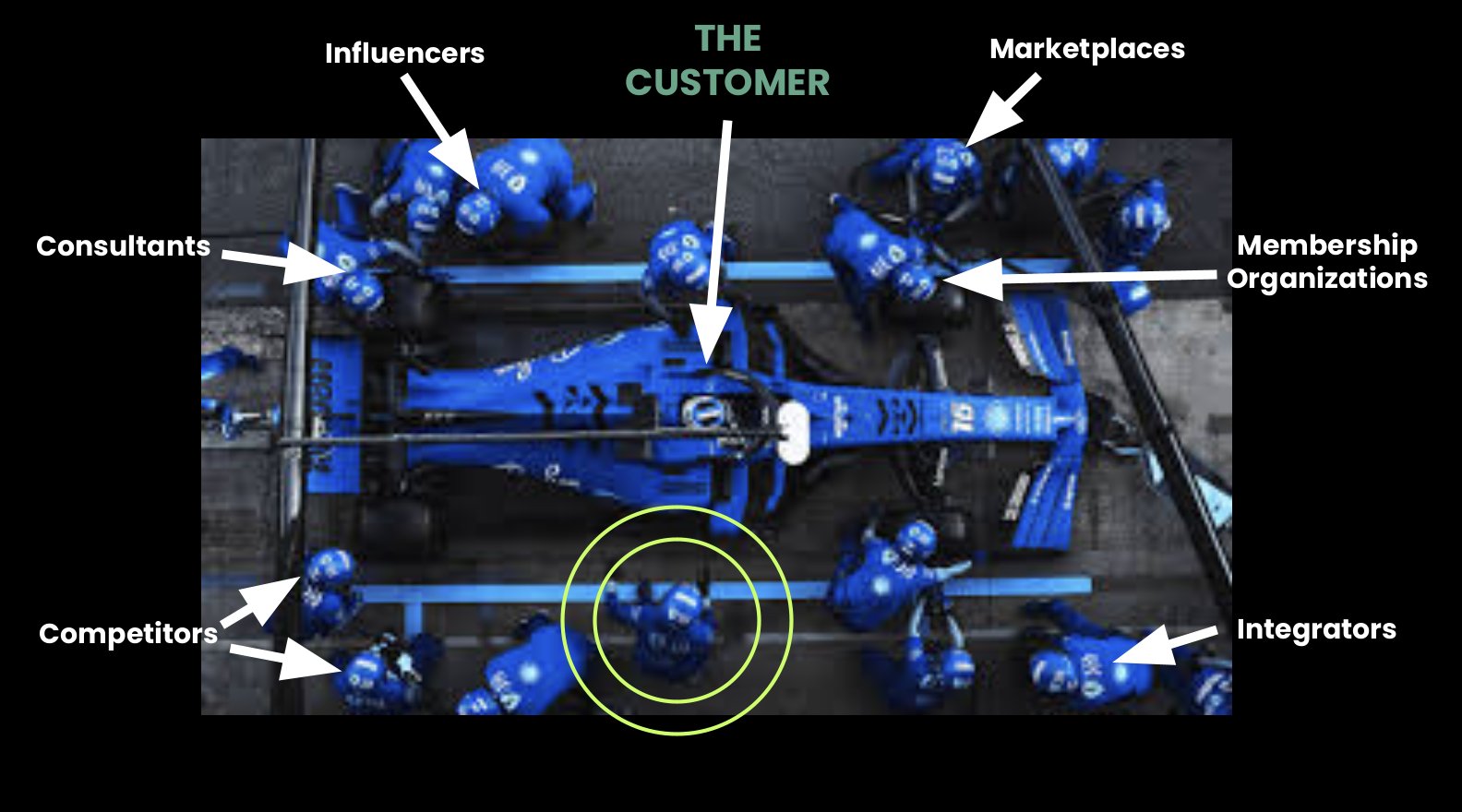
When a Formula 1 car pulls into the pit, more than twenty people swarm around it, each with a specific role and a single objective: get the driver back on the track as quickly and safely as possible.
Your customers are the drivers. The people and organizations who influence them, consultants, integrators, associations, even competitors, are the pit crew.
“Why fight for the driver’s attention when you can work with the people who already have it?” Greg asked.
By understanding who surrounds your customer and what influences their decisions, you can uncover new, often overlooked routes to reach them. These non-traditional partners might become your most valuable allies.
Find Alignment, Not Just Partners
Not all partners are good partners. True success depends on alignment—shared goals, complementary strengths, and mutual understanding of value.
Greg recommended segmenting partners into four categories:
- MVPs: High-performing partners already driving results.
- Diamonds in the Rough: Underperformers with untapped potential.
- Cash Cows: Reliable but likely at full capacity.
- Laggards: Low engagement and limited upside.
He urged leaders to “think like venture capitalists” and invest time and resources where the return will be greatest.
Approach Everything Through the Partner’s Eyes
One of Greg’s most practical lessons:
“Our goals don’t matter. What matters is how we help our partners better serve their customers.”
Partnership success starts with empathy. Before pitching your value, understand how your partner makes money, what success looks like for them, and how your solution supports their goals.
Without that understanding, even the most generous offer can fall flat—like Greg’s story of pitching recurring commissions to Salesforce consultants who valued project revenue over lifetime income.
Embrace Competition as Collaboration
Competition doesn’t always mean conflict. Greg encouraged adopting a “co-opetition” mindset, recognizing that competitors can sometimes become collaborators.
“Sometimes your so-called competition has strengths you don’t. Together, you might actually serve the customer better.”
Partnership leaders who stay open to collaboration often find new routes to market and build trust with both customers and peers.
Greg’s Homework: Pick Three Partners and Create Momentum
Greg closed with an actionable challenge:
“Pick three partners, your MVPs or your diamonds in the rough, and set up meetings this week.”
In those meetings, clarify your value proposition, help them understand when to involve you, and ask them to set up five joint meetings with their customers. Even if no immediate revenue follows, you’ll strengthen trust, spark new opportunities, and gain valuable insights into your partner relationships.
The Key Takeaway
Building a successful partner program isn’t about speed, but about precision. When every player in your ecosystem is aligned, informed, and empowered, your business moves faster together.
“A good partner isn’t a transaction—it’s an annuity. Invest in the relationship, and it will keep paying dividends."
