

Unlock Your 14-Day Free Trial
Experience how Kiflo can scale your partner program.
Book a demo
Tell a Friend is a privacy-first referral marketing platform for retailers and consumer brands, based in the Netherlands. It helps companies turn customers into measurable advocates across online and offline journeys, without requiring an app or a customer account.
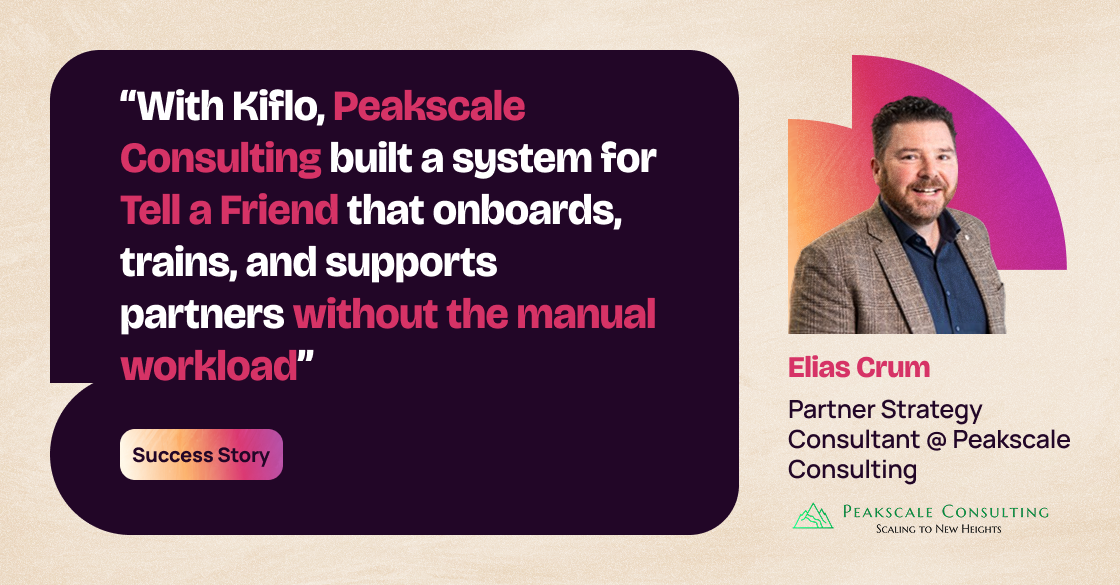
When it decided to grow through resellers, though, it had no partners, no process, and no system to run either on. To grow beyond its direct sales motion, Tell a Friend brought in Peakscale Consulting, a firm that helps B2B and technology companies design, launch, and scale partner-led growth programs. Peakscale combines partner strategy with hands-on execution: program design, PRM selection and implementation, onboarding, enablement, and channel operations.
Leading the engagement was Elias Crum, Founder and Partner Strategy Consultant at Peakscale. Brought on as an external advisor in May 2026, his mandate was to turn Tell a Friend's decision to pursue a reseller-led go-to-market into an operating model and to select and implement the platform to run it on.
When Elias started, Tell a Friend's partner program existed as a strategy, not a system. There were no active resellers yet, and no scalable structure for onboarding, enablement, deal registration, reporting, or ongoing partner management.
That gap mattered because of what came next. Without a repeatable process, every new reseller would have needed manual guidance, one-off documents, and constant follow-up. That model doesn't scale: the more partners Tell a Friend signed, the more it would have strained the team's time, and the harder it would have been to keep visibility into what partners were actually doing.
Elias's priority was to build the operating model before partner numbers grew, rather than retrofit one under pressure later.
Because Kiflo wasn't already in use at Tell a Friend, this wasn't a story of unlocking underused features. Elias implemented Kiflo as the operating backbone from day one, using it for the partner portal, deal registration, pipeline management, tasks, document sharing, and reporting, so the program would never be built around spreadsheets and email in the first place.
Elias translated Tell a Friend's reseller strategy into the concrete journey a partner would need to go through: recruitment, onboarding, training, certification, activation, co-marketing, and opportunity registration. He then built that journey in Kiflo in three stages.
Stage 1: the Kiflo foundation. Partner records, a partner portal, lead and deal registration, pipeline management, tasks, document sharing, and reporting dashboards.
Stage 2: a standardized onboarding journey. Instead of one-to-one hand-holding, Elias designed a self-serve path built around a Kiflo pipeline with defined stages: a kickoff call, a partner academy, certification, and co-marketing planning.
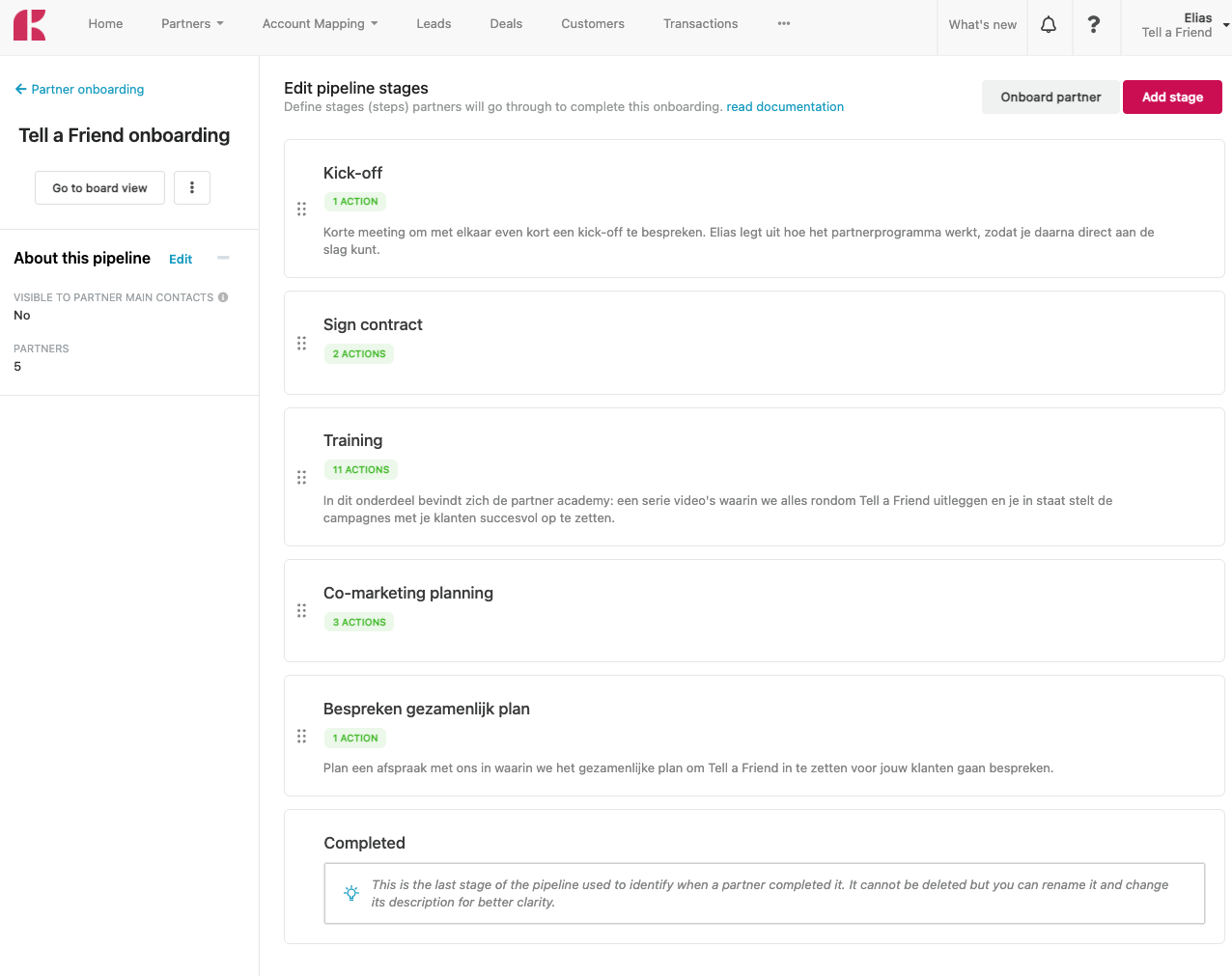
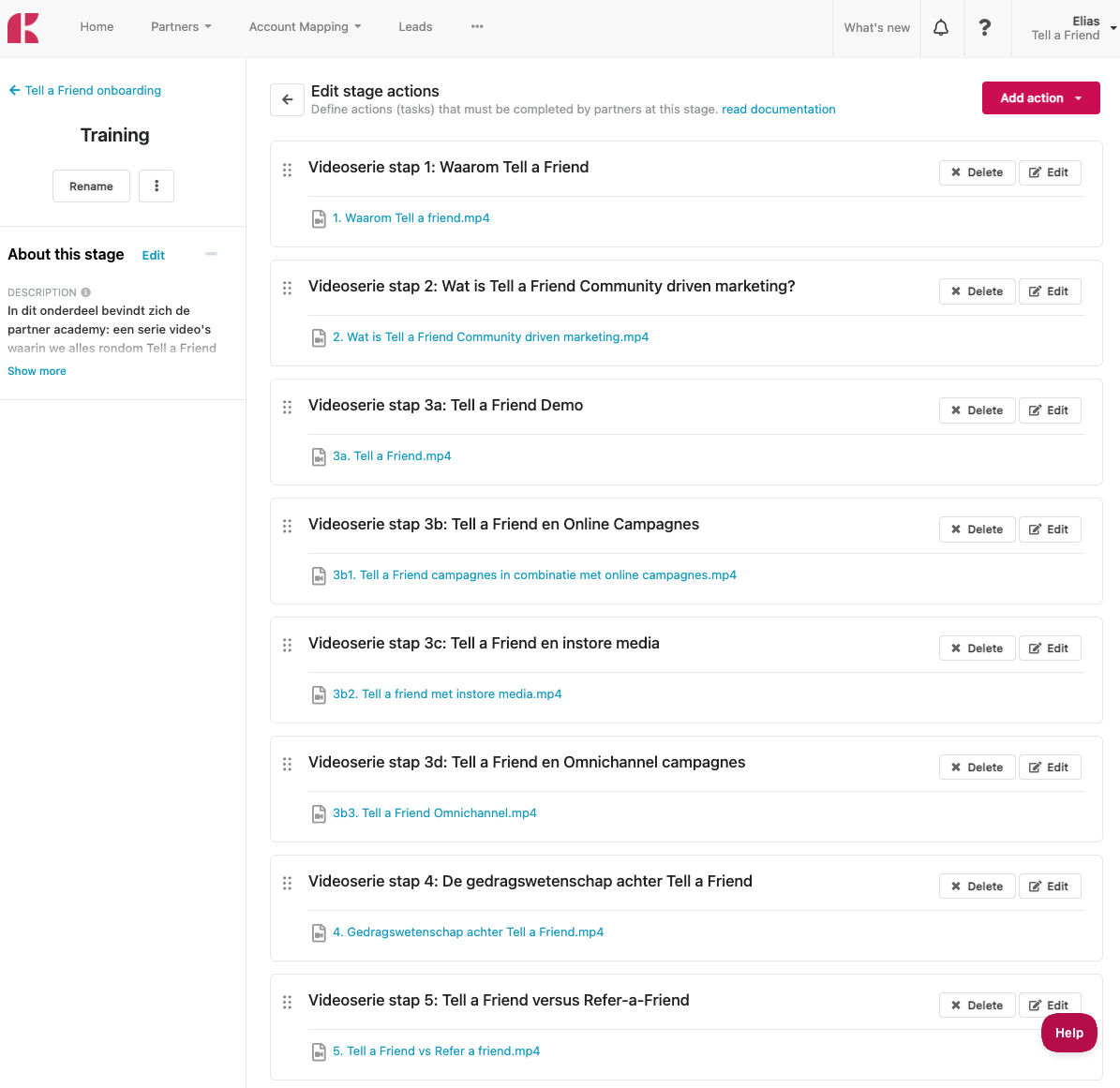
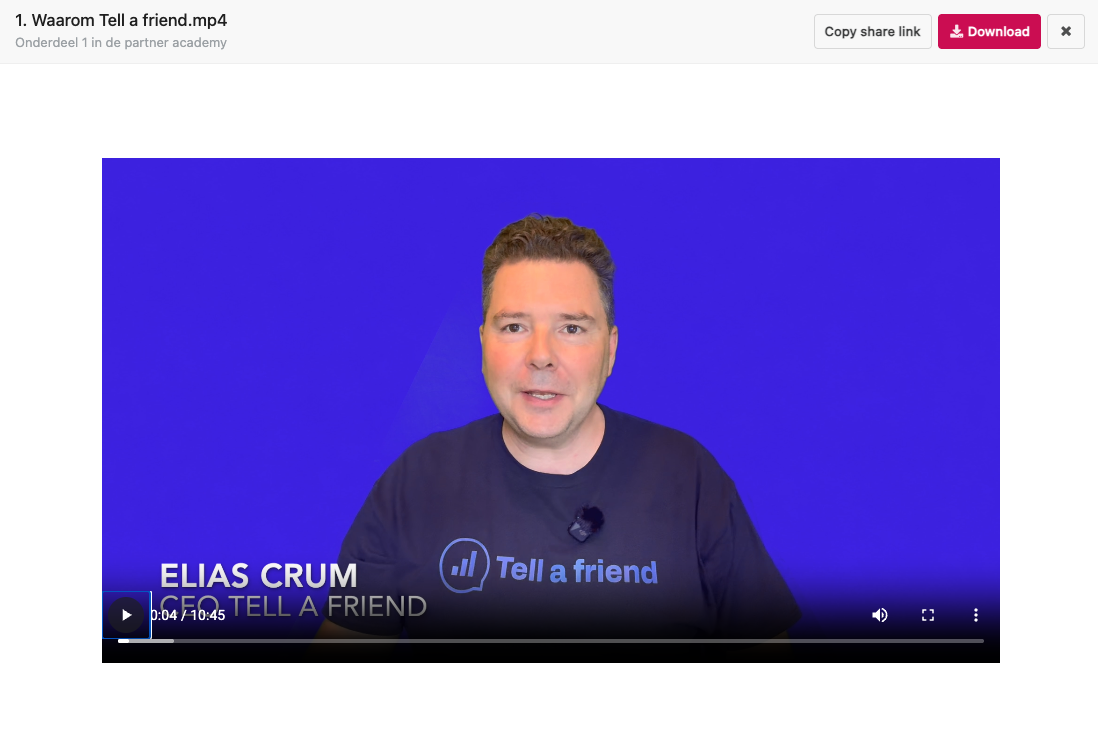
The Training stage is built around the Partner Academy: around 10 short videos, roughly five minutes each, walking partners through why Tell a Friend, its community-driven marketing model, product demos, campaign use cases, and how it compares to referral alternatives.
He also introduced self-service calendar booking, so partners can schedule time directly with the channel manager whenever they need support, rather than waiting on an email reply.
Stage 3: ongoing activation and optimization, using data inside Kiflo to track reseller activity and step in with support where it's needed.
.png)
The partner portal became the central place for partners to find the information, documents, and enablement they need. Lead and deal registration gave Tell a Friend a consistent way to capture partner-sourced opportunities, and pipeline management made progress and next actions visible instead of scattered across inboxes. Tasks kept onboarding and follow-up repeatable, document sharing kept materials out of email threads and shared drives, and reporting dashboards let the team see which resellers were active and where attention was needed.
Together, these turned the partner program into a managed process rather than a set of individual relationships Elias had to track by memory.
